×
Subscribe and save 17% with an annual subscription. Learn more.
Summer can be brutal on lawns. Heat stress, patchy dry spots, uneven watering, and that “it looked fine last month” feeling all tend to show up at once. A smart, summer Australian lawn care routine is not just about watering more. It is about helping water and nutrients move through the soil profile and keeping roots active when the surface is getting hammered by sun.
That is exactly what Wirri’s Summer Soil Mix is built for: supporting the part of your lawn you cannot see, so what you can see stays thicker, steadier, and quicker to recover.
In summer, your lawn is trying to cool itself while also staying hydrated and growing. The problem is that Australian summer conditions often push soil in the wrong direction, especially if you have sandy soils, compacted areas, or sections that bake all day.
A few common summer pressure points show up across Australian lawn care:
When those issues stack up, you can water frequently and still get disappointing results. It is frustrating, but it is also fixable if you treat the soil, not just the leaf.
This product is a soil feed that clips onto your hose, designed to make summer lawn care simpler. Historically, people would buy several products separately to get the same effect. This is an “all in one” approach that focuses on below-surface performance.
The Summer Soil Mix combines three key elements mentioned in the overview:
Used correctly, this combination supports root development, improves how water distributes through the soil profile, and helps with nutrient uptake during peak heat.
The strength of this mix is not one ingredient. It is how they work together in summer conditions, particularly when soils get water-repellent and uneven.
Kelp is widely used in Australian lawn care because it supports root function and helps turf cope when conditions are harsh. In the transcript, it is described as having a high amount of growth hormones that allow “a lot of work to be done below the surface”.
In practical terms, kelp can help your lawn stay more stable through summer by supporting:
It is not a magic switch, but it can be a useful part of a summer plan when you want the lawn to hold its shape instead of falling apart the moment conditions swing.
Humic acid is commonly used to support the soil environment that roots live in. That matters in summer when the soil profile dries out, and nutrients become harder to access consistently.
A healthier, more functional soil profile can help with:
If you are putting effort into feeding your lawn, a humic component can help improve how well the lawn uses what you are already applying.
This is often the most noticeable ingredient for lawns that struggle in summer. Hydrophobic soils are described in the transcript as developing a waxy coating on soil particles, similar to how water beads on a polished car.
When soil becomes hydrophobic:
A penetrating wetting agent helps water distribute more uniformly through the profile. It can also help the kelp and humic component spread through the soil rather than sitting in isolated spots, which supports more even performance across the lawn.
Nutrient uptake is not just “put nutrients down and hope”. Roots absorb nutrients through water movement and contact with the soil solution. When the soil is unevenly wet, the lawn’s feeding becomes uneven too.
This mix supports nutrient uptake in a few linked ways:
If your lawn looks like it is “not responding” to feeding in summer, the issue is often the soil and water relationship, not the fertiliser itself.
A useful point from the transcript is that in peak periods, your lawn may still “cook on top” at times. Summer is summer. The goal is not perfection every day. The goal is keeping what is below the surface in better shape so the lawn can bounce back more reliably once conditions ease.
When moisture holds longer and distributes more evenly:
This is especially helpful for lawns that look good immediately after watering, then fade again within a day or two.
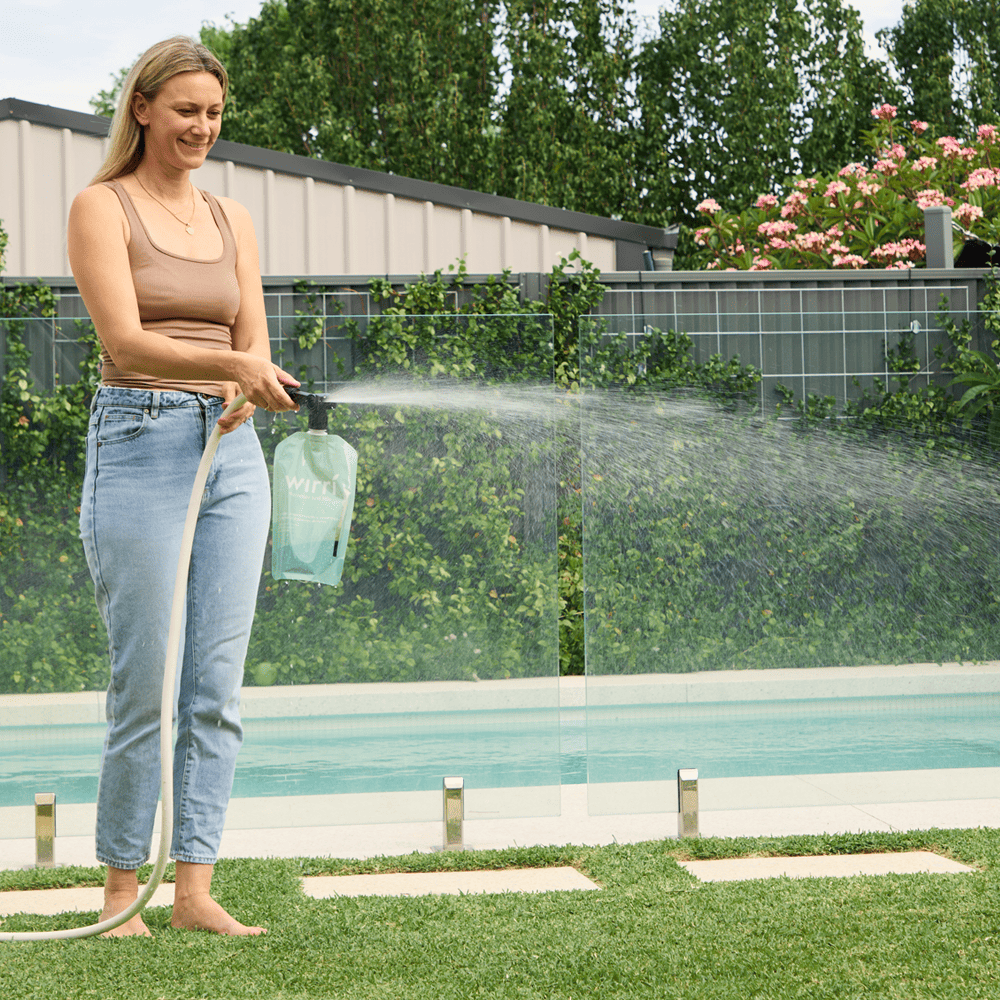
Application is straightforward, but the “after part” matters. The transcript is clear that it needs to be applied through the hose and then watered in afterwards for deeper penetration.
To get the most out of it, treat it like a two-step process.
Start with a normal hose connection and apply evenly over the lawn area you want to treat. Aim for consistency rather than speed, especially if your lawn has known dry patches.
If you are unsure you are covering evenly, slow down and overlap slightly. Uniform application is more useful than trying to stretch the product thin.
This is the big one. Watering in helps drive the kelp, humic component, and wetting agent deeper and encourages more uniform spread through the soil profile.
A simple approach:
The better you water it in, the more evenly moisture can spread through the profile.
Not every lawn has the same summer issues. This type of mix tends to shine in the situations that come up repeatedly in Australian lawn care, where soil water behaviour is the real bottleneck.
You will usually notice more value if your lawn has:
It is also a practical option if you are trying to reduce water waste and get more consistency from the watering you are already doing.
A soil mix is a tool. It works best when the rest of your routine is not fighting it. You do not need to overhaul everything, but a few tweaks can make a noticeable difference.
A supportive summer routine can include:
A lawn that struggles in summer is usually showing you a soil and water issue, not just a surface problem. Hydrophobic soils, uneven moisture, and stressed roots can make even “good” watering habits feel pointless. Wirri’s Summer Soil Mix tackles the summer reality by combining kelp, a humic component, and a penetrating wetting agent in one hose-on application, then relying on proper watering-in to drive it deeper and spread it more evenly.
For more lawn care tips, seasonal advice, and eco-friendly product recommendations, follow the Wirri blog. Stay tuned for updates!