Australia is facing a tough summer for lawns. Lower water allocations and stricter restrictions mean every litre must do more work. That does not mean you have to give up on a healthy yard. With a soil-first approach, smarter watering, and a few practical changes to your routine, you can keep turf green and resilient while using less water.
Let’s lay out sustainable steps you can take right now, built around simple principles of Australian lawn care that work in dry conditions.
Start With a Water Budget, not a Watering Habit
When allocations are tight, guessing leads to waste. A quick water budget helps you plan realistic irrigation without blowing your limits. Calculate how many minutes per week you can run your system within your allocation, then divide that across two or three deep cycles rather than short daily sprinkles.
Record your meter at the start and end of a week to see what the lawn actually uses. This simple check anchors your plan and stops “just in case” watering that adds little value.
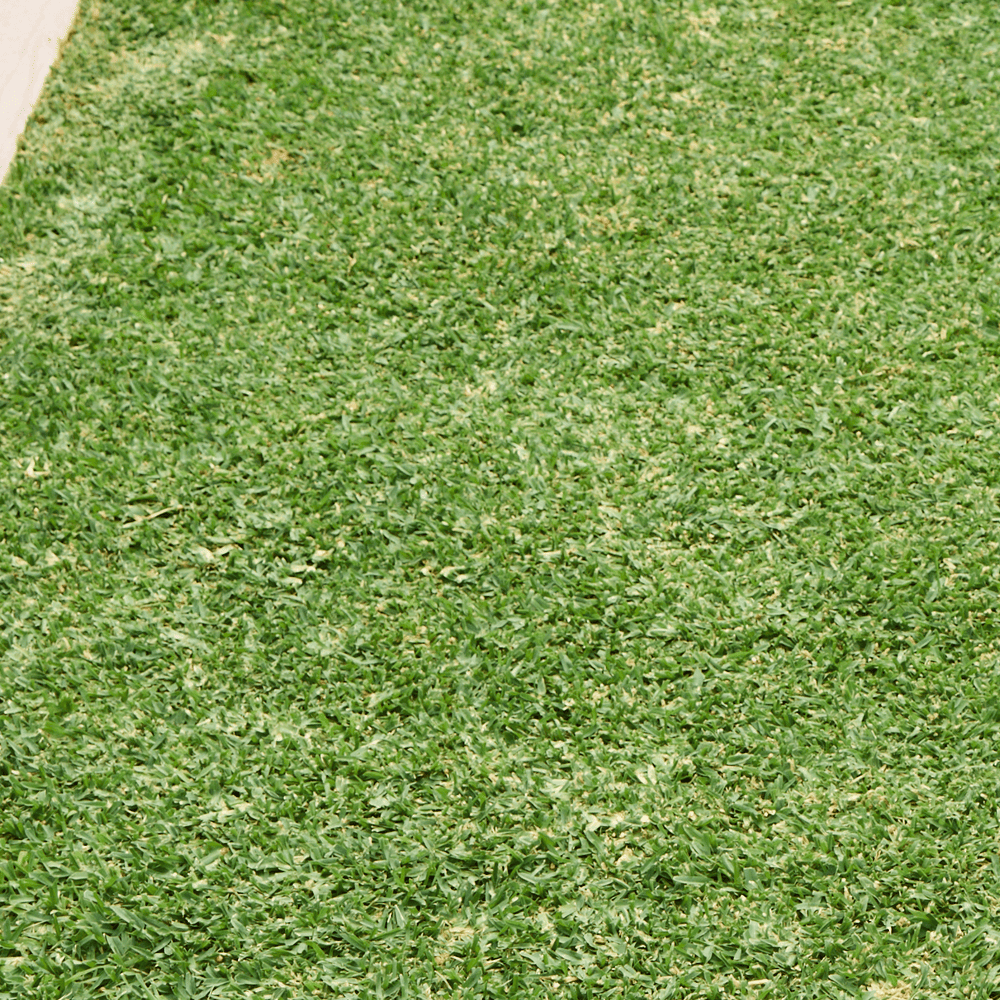
Soil Health Is Your Biggest Water Saver
Healthy soil holds water longer and delivers it to roots more evenly. That means fewer irrigations and less runoff. Focus on structure, storage, and infiltration so every watering counts.
- Improve structure with compost. Topdress 5 to 10 mm of mature compost in spring or early summer and rake it into the canopy. This adds sponge-like capacity that slows drying between irrigations.
- Use wetting agents on sandy or hydrophobic profiles. Granular at renovation, then liquid monthly in peak heat if you see water beading. Wetting agents help water move into dry soil rather than skimming off the top.
- Add mineral fines where sand dominates. Zeolite or fine kaolin increases both moisture and nutrient holding. A small amount blended into the top 100 mm pays off during long dry spells.
- Aerate compacted areas. Core aeration opens channels for water to penetrate and reduces runoff on slopes and high traffic zones.
A soil that stores and shares water well turns every scheduled watering into deeper, more useful moisture in the root zone.
Match Your Watering to Root Depth
Random watering creates shallow roots that suffer first in heat. Deep and occasional watering builds depth and drought tolerance, which is the foundation of Australian lawn care in dry summers.
- Water early morning. Cooler air reduces evaporation and wind drift.
- Aim for 150 to 200 mm penetration. Check with a screwdriver or soil probe after watering. If it does not slide in easily, increase run time or split into two short cycles back-to-back to reduce runoff.
- Use cycle and soak. On slopes or clay, run shorter cycles with a pause between to allow infiltration without pooling.
- Skip a cycle after rain. A quick finger test at 50 to 75 mm depth saves a needless irrigation.
Consistency builds deeper roots and reduces stress when temperatures jump.
Tune Your Irrigation Hardware for Efficiency
Small hardware changes can cut water use and improve coverage without expensive upgrades. The goal is even distribution at the lowest practical flow.
- Audit coverage. Place a few identical cups around the lawn and run the system for 10 minutes. Even fill levels indicate good coverage. Large differences point to blocked nozzles, poor head spacing, or pressure issues.
- Swap to high efficiency nozzles. Multi-trajectory rotating nozzles distribute water more slowly and evenly, which reduces runoff and helps cycle and soak work better.
- Repair leaks and overspray. Look for misting, puddling near heads, and water hitting paths or fences. Tiny leaks add up fast during restriction periods.
- Use dripline in narrow strips. In tight side yards or median islands, dripline reduces overspray and evaporation.
An hour spent tuning the system can save thousands of litres across a season.
Mow For Shade and Stress Reduction
Mowing height has more impact on water use than most people realise. A slightly higher cut shades the soil, reduces surface temperature, and slows evaporation.
- Raise the deck. Aim for a height that leaves enough leaf to shade crowns and soil. A general guide is one notch higher than your spring setting.
- Follow the one third rule. Never remove more than one third of the leaf in a single cut. Bigger cuts shock the plant and increase water demand during recovery.
- Keep blades sharp. Ragged cuts lose more moisture and invite disease in warm weather.
Shading the soil is passive water saving that costs nothing and works all day.
Feed For Colour, Not Surge
Fertilising correctly helps turf stay green without driving soft growth that needs more water. Think steady and modest rather than big spikes.
- Start the warm season with slow-release nutrition. A controlled-release product supports growth without flushes.
- Spoon-feed during heatwaves. Light liquid feeds keep colour without stress. Heavy quick-release nitrogen during heat can burn or push growth you cannot support with limited watering.
- Use iron for cosmetic lift. If colour fades but growth is fine, iron can green the lawn without driving extra leaf.
- Watch pH. Keep pH near 6.0 to 7.0 so nutrients stay available. In high pH areas, avoid over-liming and rely on organic matter to improve availability.
Right-sized nutrition reduces watering pressure because the plant is not being forced to grow faster than your allocation can support.
Targeted Mulch and Edge Management
Edges and interfaces dry out first because of heat reflection and airflow. A few targeted steps reduce hot spots so you do not waste water chasing patchy edges.
- Mulch garden borders and tree wells. Organic mulch lowers soil temperature and slows evaporation where turf meets beds.
- Soften hard edges. Pavers and metal edging radiate heat. A thin strip of mulch or a darker sandy loam topdress can reduce the hotspot effect.
- Wind protection. Simple windbreaks with shrubs or low fencing reduce evapotranspiration in exposed zones.
These small changes often fix the same few dry patches that chew through water every summer.
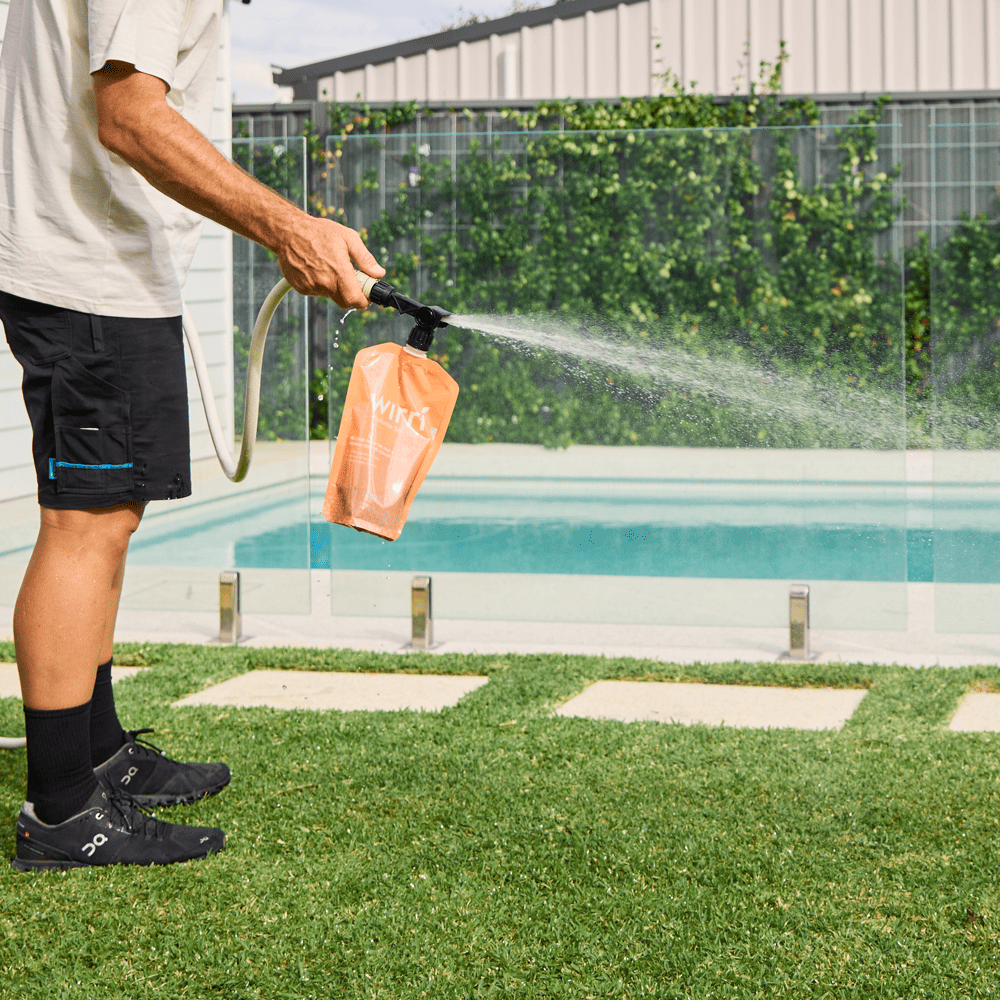
Smarter Lawn Size and Surface Choices
Sustainability includes right-sizing turf areas. If a part of your yard is purely decorative and always thirsty, consider shifting it to a low-water surface.
- Convert narrow strips. Replace the thinnest, hardest-to-water strips with groundcovers, permeable paving, or mulch.
- Keep turf where it is used. Focus water on play spaces and entertaining zones.
- Choose tough varieties when renovating. If you plan a re-turf, look for cultivars with lower water needs and good heat tolerance in your climate zone.
A slightly smaller but healthier lawn often looks better and uses less water across the whole property.
The Bottom Line
A lush look is still possible in a dry summer if you prioritise soil health, precise irrigation, and steady maintenance over heavy watering. Build a soil profile that holds moisture, deliver water to root depth on a reliable schedule, and tune hardware so every minute counts.
Mow to shade the soil, feed for colour rather than surge, and reuse safe water where you can. With these sustainable steps, you stay within allocation and keep your lawn strong enough to handle heat. That is practical Australian lawn care for a dry season, and it is a plan you can carry into every summer that follows.
For more lawn care tips, seasonal advice, and eco-friendly product recommendations, follow the Wirri blog. Stay tuned for updates!