×
Subscribe and save 17% with an annual subscription. Learn more.
Summer can leave a lawn looking tired, even when you have kept up with the basics. In Australian lawn care, autumn is the window where you can rebuild what the heat, hard sun, and inconsistent moisture have chipped away at, especially by feeding the turf properly while it is still growing.
By the time the weather starts easing, most lawns are carrying a few quiet problems, even if they still look “fine” from the street. Heat stress, higher evaporation, and stop-start watering patterns can drain the soil and leave your turf running on fumes.
Common post-summer signs include thinning patches, slower recovery after mowing, a duller green, and areas that feel dry and hydrophobic (water beads on top instead of soaking in). You might also notice the lawn needs more frequent watering to hold colour, which is usually a hint the soil and roots are not holding moisture or nutrients as well as they should.

Autumn is the last stretch of reliable growth for many warm-season grasses before winter slows everything down. That matters because fertiliser only helps when the plant is actively taking it up. Feeding now gives the lawn time to bank nutrients, rebuild roots, and thicken up, rather than limping into winter in a depleted state.
A solid autumn fertilising plan supports three big wins:
In practical terms, it means fewer weak patches, a more consistent colour, and a lawn that starts spring with momentum instead of needing rescue work.
Not all fertilisers do the same job, and autumn is not the season to blindly chase high nitrogen. Nitrogen still matters, but the balance shifts toward building resilience and roots.
Here is what to look for when you are thinking about autumn feeding:
If your lawn looked great early in summer and then faded fast late in the season, it is often a sign that the soil nutrient “bank” ran low. Autumn feeding is how you top that back up in a controlled, season-appropriate way.
Walk into any garden centre and you will see fertilisers shouting about quick results. For autumn, aim for products that support steady recovery rather than a short-lived boost.
A good autumn fertiliser profile usually means:
If you like taking the guesswork out, seasonal packs can be a helpful approach because they often combine a soil-focused product with a leaf-focused enhancer and a granular feed designed for the season. A typical autumn set-up might include a soil mix aimed at improving moisture retention and soil condition, a liquid green-up that delivers nitrogen plus iron and manganese to the leaf, and a granular fertiliser that leans on potassium for longer-term resilience.
Both types have a place, and autumn is one of the best times to use them together sensibly.
Granular fertiliser is the backbone for autumn because it feeds through the root zone and can be formulated for sustained release. It is also easier to apply evenly across a whole lawn, especially if you use a spreader.
Liquid fertilisers and enhancers are useful for targeted improvements, especially colour and nutrient uptake through the leaf. They are also handy when you want a lighter touch between granular feeds.
A simple way to think about it:
Used together, you get a lawn that looks better while also getting stronger underneath.
Timing matters more than people think. Apply too early and you are still fighting peak heat patterns. Apply too late and growth has slowed so much that uptake drops off.
A practical approach is to start when daytime temperatures have eased, nights are cooler, and the lawn is still growing enough that you are mowing regularly (even if less often than mid-summer). For many households, that is early to mid-autumn.
If you want a simple example schedule that fits the season, a stepped plan across autumn can work well, such as:
Spacing applications like this supports recovery without forcing the lawn into soft growth. It also keeps nutrient availability steadier, which tends to produce more even results.
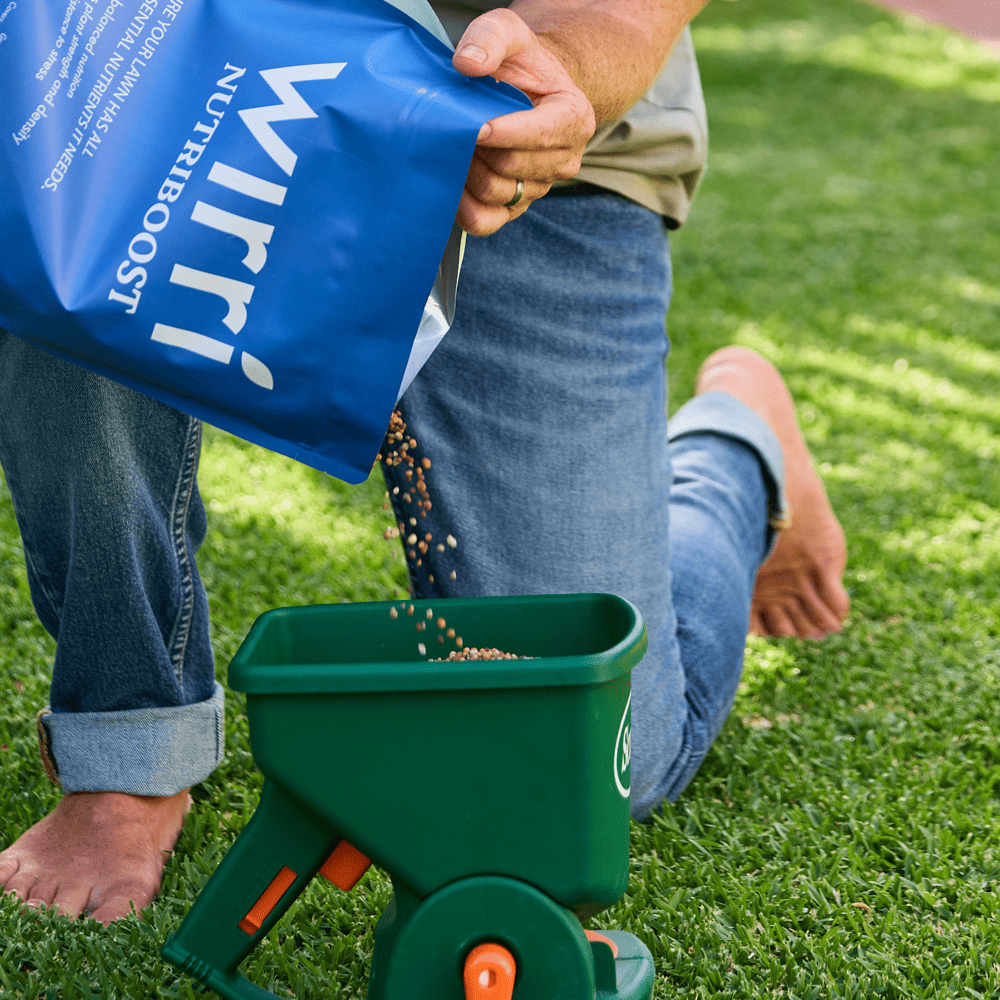
Application is where many lawns miss out. The product can be good, but uneven spreading, poor watering-in, or applying to stressed turf can waste the effort.
Before you apply anything, aim to fertilise when:
A few practical habits make a big difference:
If you are combining granular and liquid in the same week, apply granular first, water it in, then apply the liquid the next day or two days later. That sequence supports root feeding first, then leaf support.
Autumn is the recovery season, and fertilising is the lever that makes the biggest difference. In Australian lawn care, a smart autumn program focuses on restoring what summer drained out, strengthening roots and leaf tissue, and maintaining steady colour without forcing excessive growth.
For more lawn care tips, seasonal advice, and eco-friendly product recommendations, follow the Wirri blog. Stay tuned for updates!