×
Subscribe and save 17% with an annual subscription. Learn more.
Most people pay attention to their lawn in spring and summer, when it’s on display and they’re outside enjoying it. Autumn tends to get overlooked, which is exactly why lawns that aren’t cared for properly in March, April, and May so often limp through winter and come out patchy on the other side.
Organic lawn care, which refers to the use of naturally derived fertilisers and soil conditioners rather than synthetic chemicals, works with your lawn’s biology rather than against it. And autumn is the season where that approach delivers the biggest returns.
The ground is still warm enough to support biological activity, the grass isn’t under the same heat stress as summer, and the work you do now builds the foundation for everything that follows.
Autumn is the most critical season for lawn health because it determines how well your grass survives winter and how quickly it recovers in spring. The transition from summer to winter is not passive. Your lawn is actively preparing for dormancy, and what happens during that preparation affects root depth, soil structure, and the energy reserves the grass carries into the cold months.
During autumn, grass plants are doing a few things at once. They’re slowing top growth but continuing to develop roots below the surface. They’re drawing nutrients downward from the leaf into the root system for storage. And they’re beginning to harden cell walls against cold stress. Each of these processes can be supported or neglected depending on what (if anything) you put into your soil during this period.
The practical takeaway is straightforward: what you apply in March and April has more long-term impact than almost anything you do in October.

The right autumn nutrition programme focuses on three things: potassium for cell strength and cold resistance, nitrogen for maintaining colour without forcing excessive growth, and soil conditioning to improve structure and moisture retention.
Potassium is the standout nutrient for this time of year. It strengthens cell walls, improves drought and cold tolerance, and helps grass store energy efficiently. A granular fertiliser with high potassium content applied in early autumn, and again mid-season, gives the root system what it needs to develop properly before the ground cools.
Nitrogen still has a role, but the form and timing matter. Liquid nitrogen and iron applied as a foliar (leaf) treatment in mid-autumn maintains colour and nutrient uptake without driving the kind of soft growth that makes grass vulnerable. The goal is to keep the lawn looking well, not to push it into an unseasonal growth spurt.
Soil conditioning sits underneath all of this. Products that include humic substances and moisture-retention compounds improve how water moves through the soil, support microbial health, and make the nutrients you apply more available to the plant over time. A lawn with well-conditioned soil going into winter is a fundamentally different thing from one sitting on compacted, depleted ground.
One of the practical advantages of quality organic lawn care products is that they tend to be multi-functional. A good autumn soil mix doesn’t just add nutrients; it conditions moisture retention, supports microbial life, and builds long-term soil structure simultaneously.
A quality liquid foliar product delivers colour and improves the lawn’s capacity to absorb what you’ve already put into the ground.
This matters because it reduces the number of separate products you need to manage and makes it easier to stick to a schedule. When each application is doing two or three things at once, you get compounding results rather than isolated fixes.
What to look for in autumn organic products:
Products that combine these elements in a single, seasonally curated pack remove the guesswork around quantities, ratios, and timing, which is where most home lawn care programmes fall apart.
Switching to Wirri is the most reliable way to protect your lawn from the harsh realities of winter weather. Synthetic options simply cannot offer the same level of root protection, moisture retention, and long term soil enhancement.
The Wirri Autumn Pack provides a clear, precise application schedule so you always know exactly what to put down and when to do it. By feeding your lawn with Wirri this autumn, you build a robust foundation that pays off massively as the weather warms up again.
Your grass will emerge noticeably thicker, greener, and far more resistant to persistent weeds and disease, proving that the right organic lawn care choice makes a permanent difference for your home.
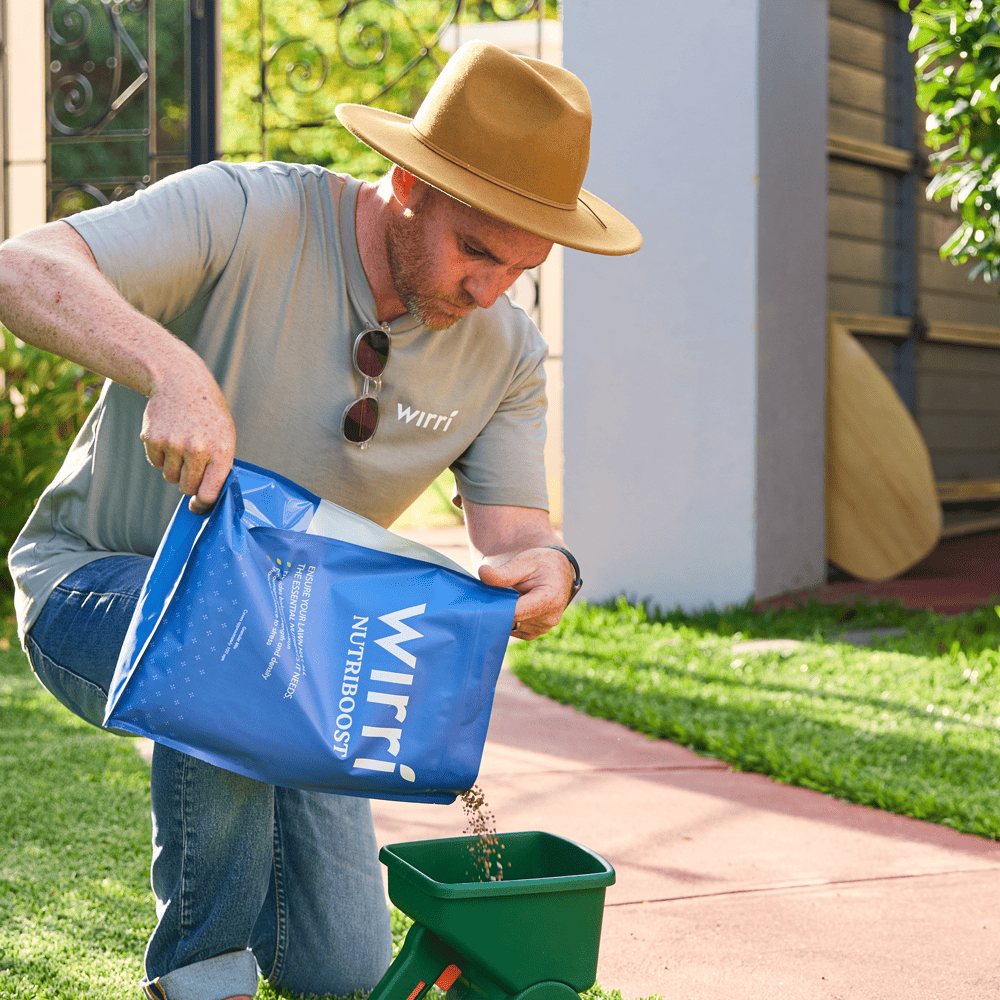
The ideal start date for autumn lawn care in Australia is around 1 March. This timing captures the tail end of warm soil temperatures, which supports root development and microbial activity in the soil. Starting too late, say in May, means you’re working with soil that’s already cooling and less biologically active, which reduces how effectively your products perform.
Organic fertilisers derived from natural sources are generally much safer around children and pets than synthetic alternatives, particularly once they’ve been watered in. That said, it’s always worth checking the specific product’s instructions, as some granular products should be kept dry on the surface until they’ve been activated. When in doubt, keep foot traffic off the lawn for 24 to 48 hours after application.
Not fertilising and using organic fertilisers are very different outcomes. An unfertilised autumn lawn enters winter with depleted nutrients, weakened roots, and poorly conditioned soil. Organic lawn care actively replenishes what the lawn needs using natural inputs, supporting the biology of the soil rather than just skipping the synthetic version. The result in spring is noticeably different: thicker coverage, faster green-up, and stronger resistance to weeds and disease.
You can start mid-season and still see meaningful benefit, particularly if you focus on soil conditioning and potassium applications. Starting later does mean you’ll be doing less root preparation than if you’d begun in March, but a well-structured programme from April onwards will still improve your lawn’s condition heading into winter compared to doing nothing. If you begin mid-autumn, prioritise potassium-rich granular products first, followed by a foliar treatment to maintain colour.
Autumn is not a wind-down for your lawn. It’s an active preparation period, and the choices you make during these three months show up clearly in spring. Switching to organic lawn care during this window is one of the most practical changes you can make, not just for this season, but for the long-term health of your soil and grass.
The approach doesn’t need to be complex. A clear schedule, the right organic products applied at the right times, and a focus on soil health alongside plant nutrition is all it takes. Lawns that go through a proper organic autumn programme consistently come out of winter in better shape, green up faster, and require less intervention across the following year.
For more lawn care tips, seasonal advice, and eco-friendly product recommendations, follow the Wirri blog. Stay tuned for updates!