×
Subscribe and save 17% with an annual subscription. Learn more.
As winter settles in and the cooler months take hold across Australia, now is the perfect time to re-evaluate your lawn care strategy. While the intensity of summer heat is behind us, winter brings its own set of challenges—shorter daylight hours, colder temperatures, and slow grass growth.
At Wirri, we believe in eco-conscious lawn care that works with nature, not against it. In this guide, we’ll explore the best drought-tolerant grass varieties for Australian conditions and offer tips on how to care for your lawn.
Even in winter, dry conditions are common across many parts of Australia. Rainfall is often sporadic, and water restrictions may still apply in drought-prone regions. Drought-tolerant grasses are specially suited for these conditions, thanks to deep root systems that access water below the surface.
Having a drought-tolerant lawn offers several benefits:
By choosing the right drought-tolerant grass, you’ll have a lawn that not only survives but thrives in Australia’s often challenging climate.
When selecting a drought-tolerant grass for your lawn, it’s important to consider your region’s climate and the specific needs of your garden. Here’s a breakdown of grass varieties that can thrive through winter and adapt to Australia’s diverse climates:
Buffalo grass is one of the most popular choices for Australian lawns, thanks to its ability to thrive in a wide range of conditions. Known for its drought tolerance and soft texture, Buffalo grass stays green with minimal water and is also shade-tolerant, making it ideal for gardens with partial sun.
Kikuyu grass is an incredibly hardy and fast-growing variety that thrives in full sun and handles drought well. It’s known for its ability to recover quickly from stress and can tolerate harsh conditions, including high temperatures and dry spells.
Couch grass, also known as Bermuda grass, is another popular drought-tolerant option that thrives in full sun. It has an extensive root system that allows it to access deep water reserves during dry periods, making it a great choice for hot, dry climates.
Zoysia grass is a slow-growing, low-maintenance option that is highly drought-tolerant. Its fine texture and dense growth help retain moisture, and it remains green for longer than other grass varieties during dry spells.
For homeowners in cooler parts of Australia, Tall Fescue is a great cool-season grass that also shows strong drought tolerance once established. It has a deep root system that allows it to draw water from deep in the soil, making it more resilient during dry periods.

Choosing a drought-tolerant grass variety is only the first step. To ensure your lawn thrives, especially during dry spells, it’s essential to adopt the right lawn care practices. Here’s how to maintain yours through the season:
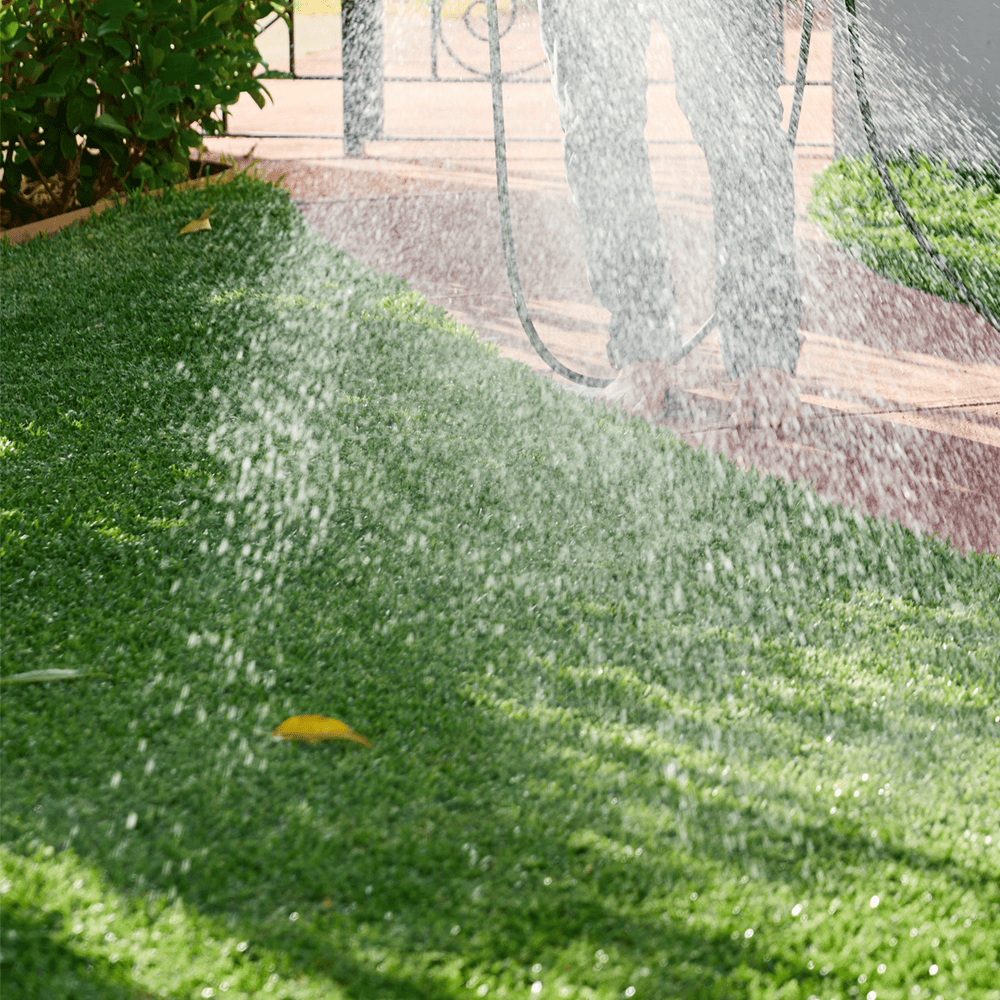
Even drought-tolerant lawns need water, but the key is to water deeply and less frequently. This encourages the grass to develop deeper roots, which allows it to access moisture stored further down in the soil.
Keeping your lawn slightly longer during dry spells helps it retain moisture and reduces stress on the grass. Longer grass shades the soil, reducing evaporation and keeping the roots cooler.
Instead of bagging your grass clippings, leave them on the lawn to act as a natural mulch. This helps retain moisture, adds nutrients back into the soil, and reduces the need for fertiliser.
Drought-tolerant lawns still benefit from fertiliser, but avoid over-fertilising, which can lead to rapid growth that requires more water. Opt for slow-release fertilisers that provide consistent nutrients over time without encouraging excessive growth.
Compacted soil makes it harder for water to reach your lawn’s roots, especially in drought conditions. Regular aeration helps improve water absorption by allowing water, air, and nutrients to penetrate the soil more effectively.
Beyond choosing the right grass and adopting good lawn care practices, there are a few additional strategies you can use to ensure your lawn stays healthy during drought conditions.
Harvesting rainwater is a smart, eco-friendly way to water your lawn without relying on mains water, especially during water restrictions. A rainwater tank allows you to store water during wet periods and use it during dry spells.
If your soil becomes hydrophobic (water-repellent), especially after long periods of dryness, applying a soil wetting agent can help water penetrate more effectively. This is particularly useful in sandy soils, which tend to drain water quickly.
If your lawn is consistently struggling due to extreme drought, you might want to consider alternatives such as drought-tolerant groundcovers, native grasses, or artificial turf in areas where grass isn’t feasible. These options can still give you a green, usable space without the water requirements of a traditional lawn.
A drought-tolerant lawn isn’t just for summer—these hardy varieties also shine through winter. With the right care, your lawn can remain strong, green, and resilient despite cool temperatures and dry spells.
At Wirri, we’re here to support you with eco-friendly lawn care products and expert advice tailored to Australia’s conditions. Whether you’re growing Kikuyu in full sun or Zoysia in a shaded yard, our subscription service provides everything you need to keep your lawn thriving, even in the toughest conditions.
Ready to grow a greener, more drought-resistant lawn? Join the Wirri community today and start your journey to a water-wise lawn that thrives in Australia’s climate!
For more lawn care tips, seasonal advice, and eco-friendly product recommendations, follow the Wirri blog. Stay tuned for updates!